
Data Center Relocation: Planning, Visualization, and Risk Reduction for Mission-Critical Moves
Data center relocations are among the most technically sensitive transitions a company can undertake. Unlike a standard office move or equipment replacement, relocating a data center involves mission-critical infrastructure, live operational dependencies, network continuity, cooling requirements, power systems, physical security, asset tracking, stakeholder coordination, and strict downtime management.
For enterprise organizations, colocation providers, cloud infrastructure companies, financial institutions, healthcare networks, government agencies, and technology-driven businesses, the stakes are high. A poorly planned relocation can affect business continuity, data access, service availability, compliance obligations, and customer trust. A well-planned relocation, however, can create an opportunity to modernize infrastructure, improve efficiency, consolidate assets, support growth, and align the facility with long-term operational goals.
This is where planning clarity becomes essential. Data center relocations require more than logistics. They require a coordinated visual, technical, and operational strategy that allows decision-makers to understand what is moving, when it is moving, where it is going, and how each phase affects the existing and future environment.
For companies managing complex moves, RENDEREXPO supports data center relocation planning through architectural renderings, site visualization, phasing diagrams, 3D floor plans, construction visualization, digital twins, and presentation visuals that help teams communicate relocation strategies with precision.

What Are Data Center Relocations?
Data center relocations involve moving IT infrastructure, servers, storage systems, networking equipment, power equipment, support systems, and associated operational functions from one data center environment to another. This may include moving from an aging facility to a new purpose-built data center, consolidating multiple facilities into one campus, shifting operations to a colocation provider, or relocating infrastructure as part of a broader modernization strategy.
A relocation can involve:
Server racks and cabinets
Network switches and routers
Storage arrays
Backup systems
Power distribution equipment
Cooling support infrastructure
Security systems
Monitoring systems
Cabling pathways
Data halls and support spaces
Administrative and operations areas
In many projects, the move is not only physical. It also includes design coordination, phased construction, new room layouts, equipment sequencing, commissioning schedules, and stakeholder approvals.
Why Data Center Relocations Require Detailed Planning
Data centers operate as interconnected environments. Power, cooling, cabling, access control, fire protection, structural support, and IT equipment layouts must work together. Changing one part of the environment can affect multiple systems.
A successful relocation plan must consider technical, operational, financial, and communication factors before the first asset is moved.
Business Continuity
Downtime is one of the biggest concerns during data center relocations. Even short interruptions can affect internal operations, customer-facing services, financial transactions, healthcare systems, logistics platforms, or public-sector services.
A relocation strategy should define which systems are mission-critical, which assets can be moved in phases, which services require redundancy, and how the organization will maintain access during the transition.
Asset Inventory and Mapping
Every piece of equipment needs to be identified, documented, labeled, and mapped. This includes hardware, serial numbers, rack locations, cable connections, dependencies, and destination locations.
Visual documentation can help relocation teams understand the existing environment and the future layout before physical work begins.
Power and Cooling Coordination
Data center equipment cannot be relocated without confirming that the new environment can support the required power loads and cooling demands. Rack density, airflow paths, hot aisle and cold aisle layouts, redundancy levels, and future expansion capacity should be reviewed early.
Cabling and Network Dependencies
Cable pathways, fiber routes, patch panels, network dependencies, and cross-connects must be carefully coordinated. Poor cable planning can cause delays, service interruptions, troubleshooting issues, and inefficient future maintenance.
Security and Access Control
Relocation projects often involve sensitive equipment and data-bearing assets. Teams must plan secure transport, access permissions, staging areas, surveillance coverage, and chain-of-custody procedures.

Common Reasons Companies Relocate Data Centers
Data center relocations are usually driven by a strategic need rather than a simple change of address. Common reasons include facility limitations, business growth, cost reduction, modernization, sustainability goals, or improved resilience.
Aging Infrastructure
Older data centers may have outdated power systems, inefficient cooling, limited rack capacity, or insufficient redundancy. Relocating to a modern facility can improve performance and reduce operational risk.
Growth and Capacity Demand
As companies expand, their data infrastructure often outgrows the original facility. A relocation may be necessary to support higher density racks, increased power demand, cloud connectivity, AI workloads, or new business units.
Consolidation
Organizations with multiple smaller facilities may consolidate into a single data center or regional campus to reduce complexity, improve management, and optimize operating costs.
Colocation Strategy
Some companies relocate from owned facilities to colocation data centers to gain access to more reliable infrastructure, better connectivity, and scalable capacity without maintaining the entire facility themselves.
Sustainability and Efficiency
Data center owners and operators increasingly evaluate energy efficiency, water usage, equipment reuse, and environmental performance. Relocation can be part of a larger sustainability or ESG strategy.
The Role of Visualization in Data Center Relocations
Technical spreadsheets, move schedules, and engineering documents are necessary, but they are not always enough to communicate a relocation strategy clearly to executives, investors, facility teams, contractors, and non-technical stakeholders.
Visualization helps translate complex relocation information into a format that is easier to understand, review, and approve.
3D Floor Plans for Equipment Layouts
A 3D floor plan can show the new arrangement of server racks, support rooms, corridors, security zones, cooling zones, electrical rooms, loading areas, and operational spaces. Compared to a flat plan, a 3D floor plan can help teams quickly understand spatial relationships and identify potential layout conflicts.
For data center relocations, 3D floor plans can support:
Rack placement review
Equipment zoning
Circulation planning
Staging area coordination
Operations team orientation
Stakeholder presentations
Phasing Diagrams for Relocation Sequencing
Phasing is critical in data center relocations. Not all equipment can be moved at once, and many systems must remain active during the transition. Phasing diagrams help illustrate what happens first, what remains operational, what shifts later, and how the project progresses over time.
These visuals can be used in executive briefings, internal planning meetings, contractor coordination, and risk review sessions.
Construction Visualization for New Data Center Spaces
When a relocation involves a new build-out, renovation, expansion, or upgraded data hall, construction visualization can show how the physical environment will be delivered before equipment is installed. This can include data hall layouts, utility corridors, equipment yards, power infrastructure, loading areas, security fencing, and exterior access points.
Construction visualization helps align design intent with real-world execution.
Digital Twins for Ongoing Data Center Management
A digital twin can serve as a visual and data-rich representation of the data center environment. During a relocation, digital twins can help teams document existing conditions, plan the future state, track equipment locations, and support operational decisions after the move.
For complex facilities, a digital twin strategy can improve long-term facility management, maintenance planning, capacity studies, and stakeholder communication.

Data Center Relocation Planning: Key Stages
A relocation should be planned as a controlled process, not a rushed move. While every project is different, most data center relocations follow several major stages.
1. Existing Conditions Assessment
The project begins with a complete review of the current data center environment. This includes IT assets, facility systems, power distribution, cooling capacity, room layouts, cabling, access routes, and operational constraints.
Visual documentation at this stage can help teams capture the existing condition clearly and reduce misunderstanding later.
2. Relocation Strategy
The relocation strategy defines the overall approach. Will the move happen in one major cutover, several phases, or a hybrid model? Which systems need redundancy? Which equipment should be replaced instead of moved? What are the acceptable downtime windows?
This stage should involve leadership, IT, facilities, operations, security, vendors, construction teams, and any outside consultants.
3. Future-State Layout
Before equipment moves, the destination environment must be clearly planned. This includes rack layouts, room relationships, airflow strategies, access paths, maintenance zones, cable pathways, and equipment staging areas.
RENDEREXPO can support this stage with 3D plans, renderings, diagrams, and visualization packages that make the future-state plan easier to review.
4. Phasing and Sequencing
The team must define how the relocation will occur step by step. Phasing should account for dependencies between systems, critical workloads, transport logistics, installation time, testing, and rollback procedures.
Visual phasing diagrams can help all parties understand the sequence and reduce coordination errors.
5. Stakeholder Review and Approval
Data center relocations often require approval from executives, IT leadership, facility managers, risk teams, investors, clients, or public authorities, depending on the project type.
Clear visuals can make these approvals easier by showing the plan in a professional, understandable format.
6. Move Execution and Coordination
During execution, teams must coordinate equipment shutdown, packing, transport, receiving, installation, cabling, testing, and validation. Clear documentation and visual references help the project team stay aligned.
7. Post-Relocation Documentation
After the move, the new environment should be documented accurately. Updated floor plans, rack diagrams, digital twin models, and operational visuals can support maintenance, future expansion, and internal training.
Risk Factors in Data Center Relocations
Relocation risk is not limited to the physical move. Many problems begin earlier, when teams lack a shared understanding of the scope or sequence.
Common risks include:
Incomplete asset inventories
Unclear rack layouts
Inaccurate cable documentation
Insufficient power or cooling capacity
Poor phasing coordination
Undefined downtime windows
Vendor coordination gaps
Security and chain-of-custody issues
Construction delays in the destination facility
Lack of executive-level communication materials
Visual planning does not replace engineering, IT strategy, or relocation logistics. However, it can make the planning process more transparent and reduce the chance that important spatial or sequencing issues are missed.
How RENDEREXPO Supports Data Center Relocations
RENDEREXPO helps data center owners, developers, architects, contractors, and project teams communicate complex relocation and facility planning information through high-quality visualization and digital construction support.
For data center relocations, RENDEREXPO can provide:
Architectural Renderings
Exterior and interior renderings can show the new or renovated data center environment, including building massing, entry points, equipment yards, data halls, operations areas, and support spaces.
These visuals are useful for executive presentations, stakeholder reviews, investor communication, marketing packages, and approval processes.
Aerial Renderings
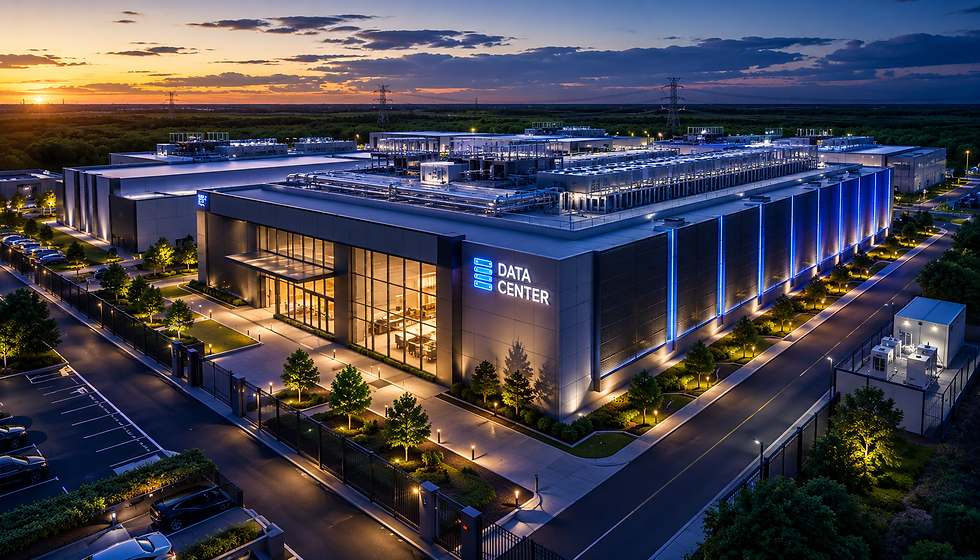
Aerial renderings help communicate site organization, building relationships, access roads, loading zones, utility areas, security perimeters, parking, and future expansion areas.
For data center campuses or large relocation programs, aerial views are especially valuable because they show the project at a strategic scale.
3D Floor Plans
3D floor plans can clarify the interior organization of the destination facility, including rack areas, technical rooms, circulation paths, equipment staging areas, and operations spaces.
Animation and Walkthroughs
Animations can help teams understand the experience of moving through the facility, reviewing access points, security zones, maintenance paths, and operational workflows.
For leadership teams and non-technical stakeholders, walkthroughs can make a complex data center plan more understandable.
Phasing and Construction Visualization
Phasing visuals can show how the relocation unfolds over time. Construction visualization can also support coordination between design teams, contractors, facility managers, and technology teams.
Digital Twin Support
Digital twins can help organizations document the current condition, plan the future state, and maintain a more useful digital record after the relocation is complete.
Why Data Center Relocation Visuals Matter for Stakeholder Communication
Data center relocations involve many stakeholders who do not always speak the same technical language. IT teams may focus on systems and dependencies. Facility teams may focus on power, cooling, and physical access. Executives may focus on cost, downtime, risk, and long-term value. Contractors may focus on constructability and sequencing.
Visual communication helps bring these groups into alignment.
A strong visualization package can help answer questions such as:
What does the new environment look like?
Where will critical equipment be located?
How will the relocation be phased?
What areas remain operational during the move?
How does the new layout support growth?
What site access and security conditions affect the move?
How will the project be presented to leadership or investors?
When the relocation plan is easy to understand, teams can make faster decisions and reduce confusion.
Data Center Relocations and Long-Term Facility Strategy
A relocation should not be treated only as a move. It should be viewed as a strategic opportunity to improve the way the data center supports the business.
The relocation process can support:
Better capacity planning
Improved energy efficiency
Stronger security planning
Modernized equipment layouts
Cleaner cable management
More effective maintenance access
Better stakeholder documentation
More scalable growth planning
Stronger investor and executive communication
With the right planning and visualization support, data center relocations can become a foundation for long-term operational improvement.
FAQ Section
What is a data center relocation?
A data center relocation is the process of moving IT infrastructure, servers, networking equipment, storage systems, and support operations from one data center environment to another. It often includes planning, phasing, equipment mapping, power and cooling coordination, transport logistics, installation, testing, and post-move documentation.
Why are data center relocations complex?
Data center relocations are complex because many systems are interconnected. Servers, networks, power distribution, cooling, cabling, security, and business applications must be coordinated carefully to reduce downtime and operational risk.
How do 3D visuals help with data center relocations?
3D visuals help teams understand equipment layouts, room relationships, phasing plans, access routes, and future-state conditions. They make technical information easier to review for executives, facility teams, IT teams, contractors, and investors.
What should be included in a data center relocation plan?
A data center relocation plan should include an asset inventory, dependency mapping, risk assessment, downtime strategy, power and cooling review, cabling plan, phasing schedule, transport plan, installation sequence, testing process, and post-relocation documentation.
Can digital twins support data center relocations?
Yes. Digital twins can support data center relocations by documenting existing conditions, showing the planned future environment, tracking assets, supporting facility management, and helping teams make informed decisions before and after the move.
When should visualization be introduced in a data center relocation project?
Visualization should be introduced early, ideally during planning and future-state layout development. Early visuals help identify conflicts, improve stakeholder alignment, support approvals, and clarify the relocation strategy before execution begins.
Who benefits from data center relocation visualization?
Executives, IT leaders, facility managers, architects, engineers, contractors, developers, investors, and operations teams can all benefit from data center relocation visualization because it turns complex technical information into clear project communication.
Conclusion
Data center relocations require careful coordination between technology, facilities, design, construction, logistics, and executive decision-making. The process involves more than moving equipment from one location to another. It requires a clear understanding of existing conditions, future-state layouts, phasing, risk, downtime, infrastructure capacity, and long-term operational goals.
Professional visualization can make this process easier to understand and easier to manage. 3D floor plans, aerial renderings, phasing diagrams, animations, construction visualization, and digital twins help project teams communicate data center relocation strategies with greater clarity.
RENDEREXPO supports data center owners, developers, architects, contractors, and project stakeholders with architectural visualization and digital construction services tailored to complex mission-critical environments. For organizations planning data center relocations, RENDEREXPO can help create the visual tools needed to explain the project, align stakeholders, support approvals, and communicate the transition with confidence.


Comments